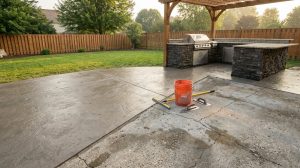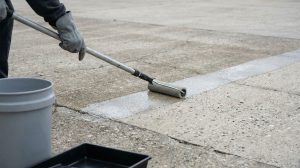
When to Use a Concrete Bonding Primer and When to Skip It
Primer controls suction, it does not fix bad prep. When a bonding primer earns its place on an overlay job, when it hurts, and when a slurry coat is the right call instead.

Lorem ipsum dolor sit amet, consectetur adipiscing elit. Ut elit tellus, luctus nec ullamcorper mattis, pulvinar dapibus leo.

Primer controls suction, it does not fix bad prep. When a bonding primer earns its place on an overlay job, when it hurts, and when a slurry coat is the right call instead.

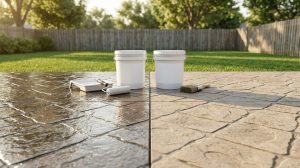
Powder release antiques the surface, liquid release does not. What each type costs you in dust, cleanup, color depth, and sealer adhesion on a stamped job.

Carrier chemistry, not sheen, decides whether a concrete sealer sets up correctly. How water based and solvent based products differ on film formation, solids, cold weather, failure modes, and resealing.

A commercial entryway needs to look sharp and meet accessibility code, and those goals can conflict if design comes before compliance. Here’s how to balance both.

The gap between an estimate and a final invoice is where client trust holds or breaks. Here’s how to budget a decorative concrete job accurately.

Every job site has an overlay opportunity sitting nearby. Here’s how to spot it and pitch it without it feeling like a sales pitch.

Stain color is a chemical reaction, not a coat of paint, which is exactly what gives stained floors their character. Here’s how to choose it well.

A worn commercial floor doesn’t always need full replacement. Here’s how decorative overlays can extend its life without shutting the business down.

From ashlar slate to wood plank, pattern choice shapes how a stamped concrete project actually reads. Here’s what’s popular and why.

A product data sheet has the answers, but only if you know which sections actually matter. Here’s how to read one before placing an order.