
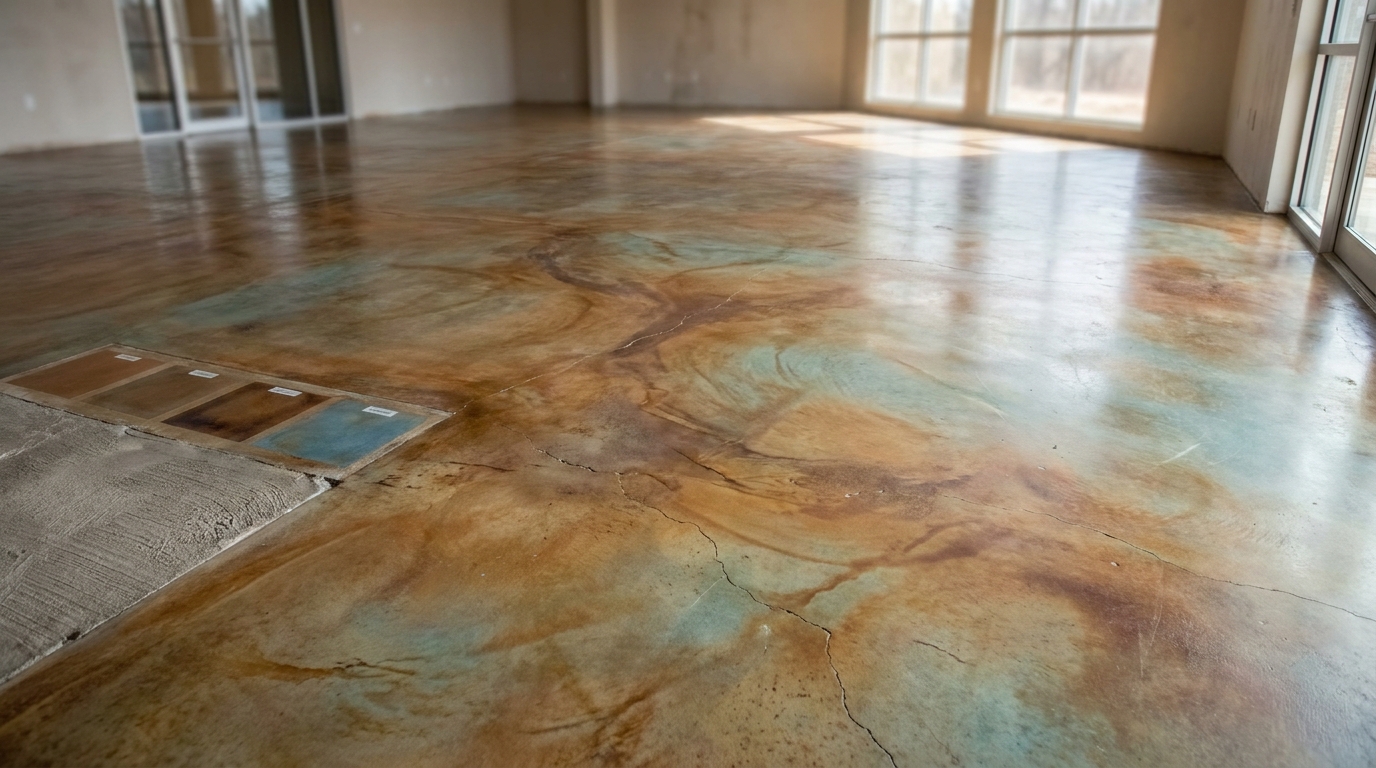
Color and Texture Options for Stained Concrete Floors
Stained concrete rewards patience and punishes shortcuts, mostly because color isn’t something you fully control, you guide it. Every slab reacts a little differently, which is exactly what gives stained floors their character. Our sealer guide on choosing the right concrete sealer covers how to protect that color once it’s down. This is about choosing it in the first place.
Why Stain Color Isn’t Like Paint Color
Acid-based stains react chemically with minerals already present in the concrete, which means the same stain color can look noticeably different from one slab to the next depending on the concrete’s age, porosity, and cement content. Water-based stains behave more predictably and offer a broader, more consistent color range, but they still interact with the surface rather than simply coating it.
The American Society of Concrete Contractors, through its Decorative Concrete Council, has spent years documenting and recognizing decorative finish work precisely because this variability is what makes stained concrete a craft rather than a straightforward product application. That’s a useful framing for setting client expectations before a stain project starts.
Acid Stain Color Ranges
- Earthy tones dominate the acid stain palette: tans, browns, terra cottas, and soft blue-greens
- Colors appear more variegated and marbled than water-based alternatives
- Results vary noticeably based on the slab’s mineral content and finishing history
Water-Based Stain Color Ranges
Water-based stains offer a much broader color spectrum, including blacks, whites, and even vivid colors that acid stains simply can’t replicate. They’re a better fit when a client wants a specific, predictable color match, such as matching a brand palette in a commercial space.
Texture Considerations Beyond Color
- A troweled, smooth finish shows stain color and variation most clearly
- A light broom texture adds slip resistance while still allowing color to read through
- Existing surface imperfections, cracks, and trowel marks become part of the finished look rather than flaws to hide
Testing Before Committing to a Full Floor
A test patch in an inconspicuous area is worth the extra step on every stain job, especially with acid stains where the final color can’t be predicted with certainty. Skipping this step and committing directly to a full floor is one of the more common reasons a stain project doesn’t match the client’s expectations.
How BonTon Supply Helps Contractors Choose Color and Texture
Matching a stain product to the desired look, and setting realistic expectations about variability, is where experience with the specific product matters most.
Browse finished stained floor examples in the gallery, or check the FAQ for stain-specific product questions.
- Guidance on acid versus water-based stain selection
- Support planning test patches before a full floor commitment
- Stone Edge stain systems built for a range of color and texture goals
Getting stain color right starts with understanding it’s a reaction, not a coat of paint. BonTon Supply helps Ohio contractors set that expectation and choose the right product for it. Browse the shop or request a quote to talk through your next project.