
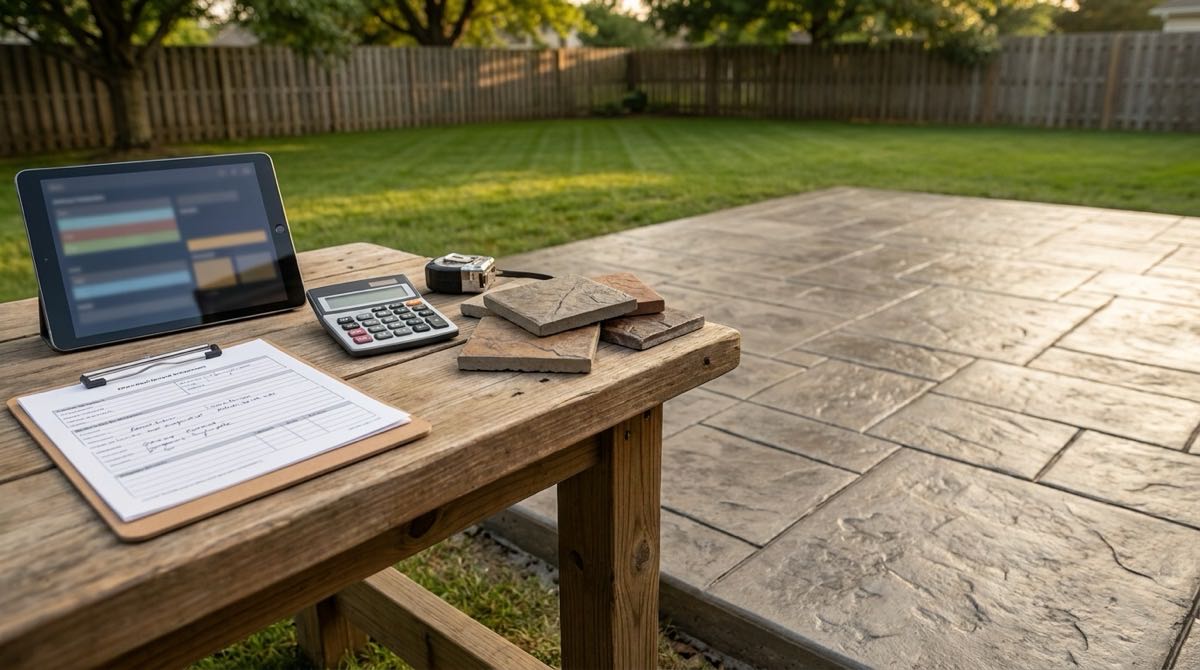
How to Budget a Decorative Concrete Project From Estimate to Final Invoice
The gap between an initial estimate and a final invoice is where client trust either holds or breaks. Decorative concrete has more moving cost variables than standard flatwork, which means budgeting it well takes more than a square footage multiplier. Our piece on common mistakes contractors make applying decorative overlays covers the execution side of this. Budgeting is where those same risks get priced in upfront.
What Belongs in the Initial Estimate
A credible estimate accounts for more than material and labor. Surface prep scope, especially if the substrate condition is unknown until demo or cleaning begins, sealer and maintenance costs, and a reasonable contingency for weather delays all belong in the number a client sees first, not as surprises added later.
Material and labor costs for construction projects fluctuate with broader market conditions. The U.S. Bureau of Labor Statistics tracks producer price indexes for construction materials, including concrete products, which shift based on supply chain and demand conditions throughout the year. Building a reasonable buffer against that volatility into a quote protects margin on longer-lead projects.
Line Items Worth Separating Out
- Demolition or removal costs if replacing an existing surface rather than overlaying it
- Surface prep as its own line item, since scope can expand once work begins
- Material costs broken out by product category: overlay, stamp, stain, sealer
- Labor broken out by phase: prep, placement, finishing, sealing
- A defined contingency percentage for weather delays or unforeseen substrate issues
Why Contingency Percentage Should Vary by Job
A straightforward overlay on a known, sound substrate carries less budget risk than a job with unknown substrate condition or complex vertical work. Applying a flat contingency percentage across every job either overprices simple work or underprices risky work. Scaling contingency to the actual risk profile of the specific job keeps quotes both competitive and protected.
Managing the Conversation When Costs Shift
- Document substrate condition discoveries with photos before scope or cost changes
- Communicate cost changes as soon as they’re identified, not at final invoice
- Reference the original estimate’s assumptions when explaining any variance
How BonTon Supply Helps Contractors Budget Accurately
Material cost is one of the more predictable line items in a decorative concrete budget, and having current, accurate pricing before finalizing a client-facing estimate protects margin on both ends.
Check the FAQ for pricing questions, or browse the gallery for a sense of project scope across different budget levels.
- Current material pricing to build accurate initial estimates
- Guidance on where budget risk typically hides in decorative concrete jobs
- Support keeping material costs predictable across a project’s timeline
A budget that holds from estimate to final invoice protects both the client relationship and the margin. BonTon Supply helps Ohio contractors build that budget on solid material cost information. Browse the shop or request a quote to talk through your next project.