
Water Based vs Solvent Based Concrete Sealers and When to Use Each
Sheen rating tells you what a sealer looks like. It tells you nothing about whether it will set up right on the slab you are coating Thursday morning. The carrier does that.
Water based or solvent based is the first decision, not the last one. Our guide to choosing the right concrete sealer handles penetrating versus film-forming. This one handles the carrier.
The Carrier Decides How the Film Forms
Solvent based sealers dissolve resin in an organic solvent. Solvent flashes off, resin drops out, film knits together. One step.
Water based sealers do not dissolve the resin. They suspend it as particles in water. The water leaves, then the particles have to soften and fuse into each other. That second step is called coalescence, and it needs heat to happen. Two steps, two chances for the weather to stop you.
That is the whole difference, and everything below comes out of it.
VOC Limits Are Why Water Based Took Over
Water based sealers did not win shelf space on performance. They won it on regulation. The solvents that make solvent based products work are volatile organic compounds, and coating VOC content is regulated federally through the EPA’s National Volatile Organic Compound Emission Standards for Architectural Coatings.
Federal is the floor. States and regional air districts set their own limits, some considerably tighter, and they change. A product that ships legally into one state is not automatically compliant in the next one.
If a job carries a VOC threshold, confirm the number with the air quality authority that governs it and check the current data sheet before you order. A spec sheet from a job two years ago is not a compliance document.
Solids Content Is the Number Worth Reading
Solids is what stays on the slab after the carrier leaves. It is the most useful figure on the label and the one most people skip.
Higher solids means more film per coat. Fewer passes to reach build, better gloss development, more material doing protective work. Pro Seal 2500 runs 25% solids on the solvent side, and that build is most of why crews grab it for exterior decorative work where the color has to hold.
Lower solids is not a downgrade. Thinner film per pass is what you want on an interior floor that should not read as plastic. Just count your coats before you start instead of finding out at pail three.
| Factor | Water Based | Solvent Based |
|---|---|---|
| Film formation | Evaporation plus coalescence | Evaporation only |
| Temp and humidity sensitivity | High | Lower, more forgiving when cool |
| Odor and ventilation | Minimal, works in occupied space | Strong, needs ventilation and PPE |
| Effect on color | Stays close to neutral | Wets out and darkens |
| VOC position | Lower, easier to comply | Higher, check state and local limits |
| Cleanup | Water while wet | Solvent per the data sheet |
Solvent Darkens the Surface, Water Based Does Not
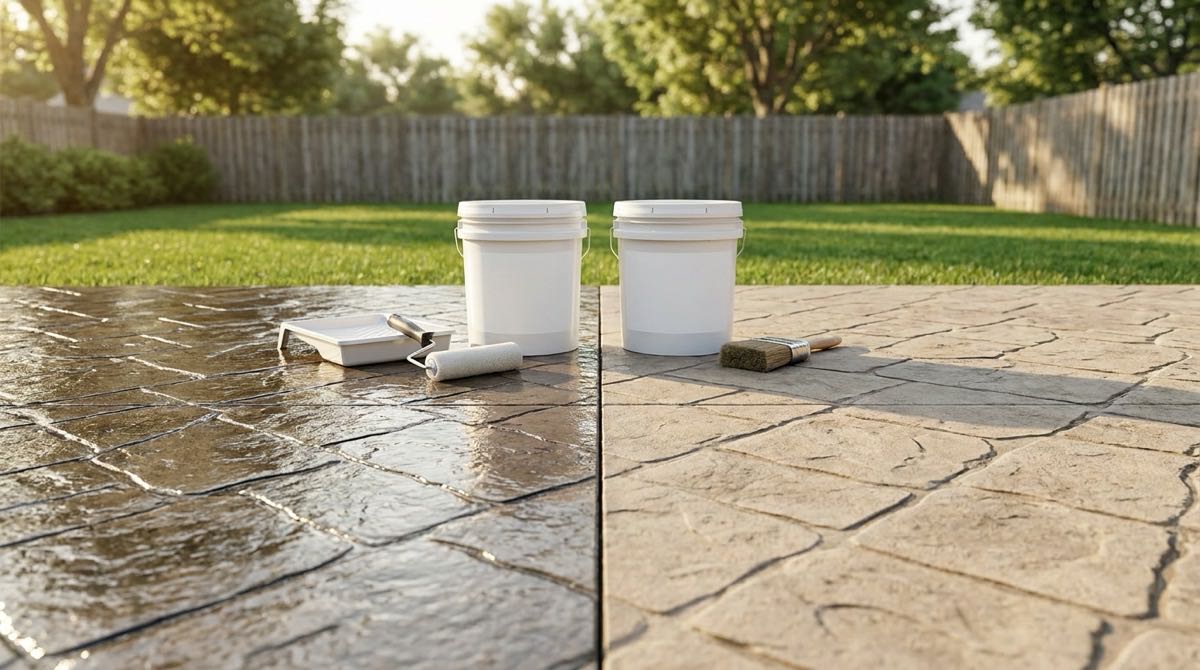
Solvent based wets the surface out. Color deepens, antiquing gains contrast, integral color reads richer. On a stamped patio where the color work is the job, that is the effect the client is paying for.
Water based stays near neutral. Less darkening, less pop unless the product is built for sheen. On an interior smooth coat, that is the right call.
Seal a sample panel off the same batch either way. Cure it, get the sign-off, then coat the job. Color shift is not a conversation to have with a homeowner standing on a finished patio.
Cold Weather Kills Water Based First
Freeze/thaw conditions squeeze the sealing calendar at both ends of the year, and the two carriers do not shrink evenly. Water based goes unworkable first in the fall and comes back last in the spring. Coalescence needs warmth a 45-degree morning does not have.
Check these before anybody cracks a pail:
- Surface temperature, not air temperature, since a slab holds cold hours past sunrise
- Dew point against slab temperature, which decides whether moisture condenses into a curing water based film
- The overnight low, because a water based film that has not coalesced by dark usually does not recover
- Direct sun on dark or colored surfaces, which can flash a solvent based sealer fast enough to trap it
- Rain inside the manufacturer’s stated rain-safe window
Solvent gives you more room at the cold end, which is why it stays on the truck later into the fall. That room is real but it is not unlimited, and the data sheet still sets the floor. On exterior work seeing standing water and cycling, durability matters as much as the application window, and our piece on pool deck surfaces that hold up to Ohio winters covers what that exposure does over time.
What Each Carrier Fails Like
Most sealer callbacks are not defective product. They are carrier chemistry meeting the wrong conditions. The symptom tells you which one.
- Blushing or milky haze. Water based. Moisture got trapped before the film closed, from a damp slab, high humidity, or an overnight dew point hit.
- Bubbling and pinholing. Solvent based on a hot slab. The top skins over before the solvent underneath gets out, and the vapor pushes through.
- Roller lap marks and picture framing. Mostly water based. Short wet edge, no tolerance for stopping mid-panel.
- Film stays soft or tacky. Water based applied below minimum temperature. It will not cure out later.
- Peeling in sheets. Bond failure underneath, not a carrier problem, though a high-build solvent film comes off in bigger pieces.
Read it right, because the fixes go opposite directions. A blushed water based film will sometimes reopen and re-cure with a recoat. A solvent film with trapped vapor comes off.
Resealing Locks You Into the First Decision
Whoever seals it first sets the terms for whoever reseals it in three to five years.
Solvent over solvent bites in and re-melts the old coat. That is why solvent systems reseal clean. Water based over a solvent film has no chemical grab at all. It sits on top and depends entirely on mechanical adhesion to a slick surface, which is a bad bet.
Identify the existing film before you reseal anything you did not coat. Wipe a solvent-dampened rag somewhere out of sight. If the old sealer softens, it is solvent based. If it does not, plan on stripping or stay in the same chemistry. Guessing here is how a crew ends up pulling two coats instead of one.
How BonTon Supply Stocks the Sealer Side of a Job
We stock both carriers because neither one wins every job. Pro Seal and Pro Seal Supreme cover water based in matte and semi-gloss. Pro Seal 2500 covers solvent based where build and color depth matter. Deck Seal handles exterior deck work. No minimum order quantities, regional delivery across Ohio and western Pennsylvania.
- Sealers in both carriers, matte through semi-gloss
- Prep and finish products, including primers and release agents that affect how the sealer performs later
- Overlay mixes, matched to the finish going over them
Choosing on sheen alone leaves the variable that decides the job unanswered, because the carrier is what determines whether the film sets in the conditions you have the day you coat. If you are weighing water based against solvent based for a specific slab and a specific week, tell us the surface and the timing. Contact us and we will go through what is in stock.