
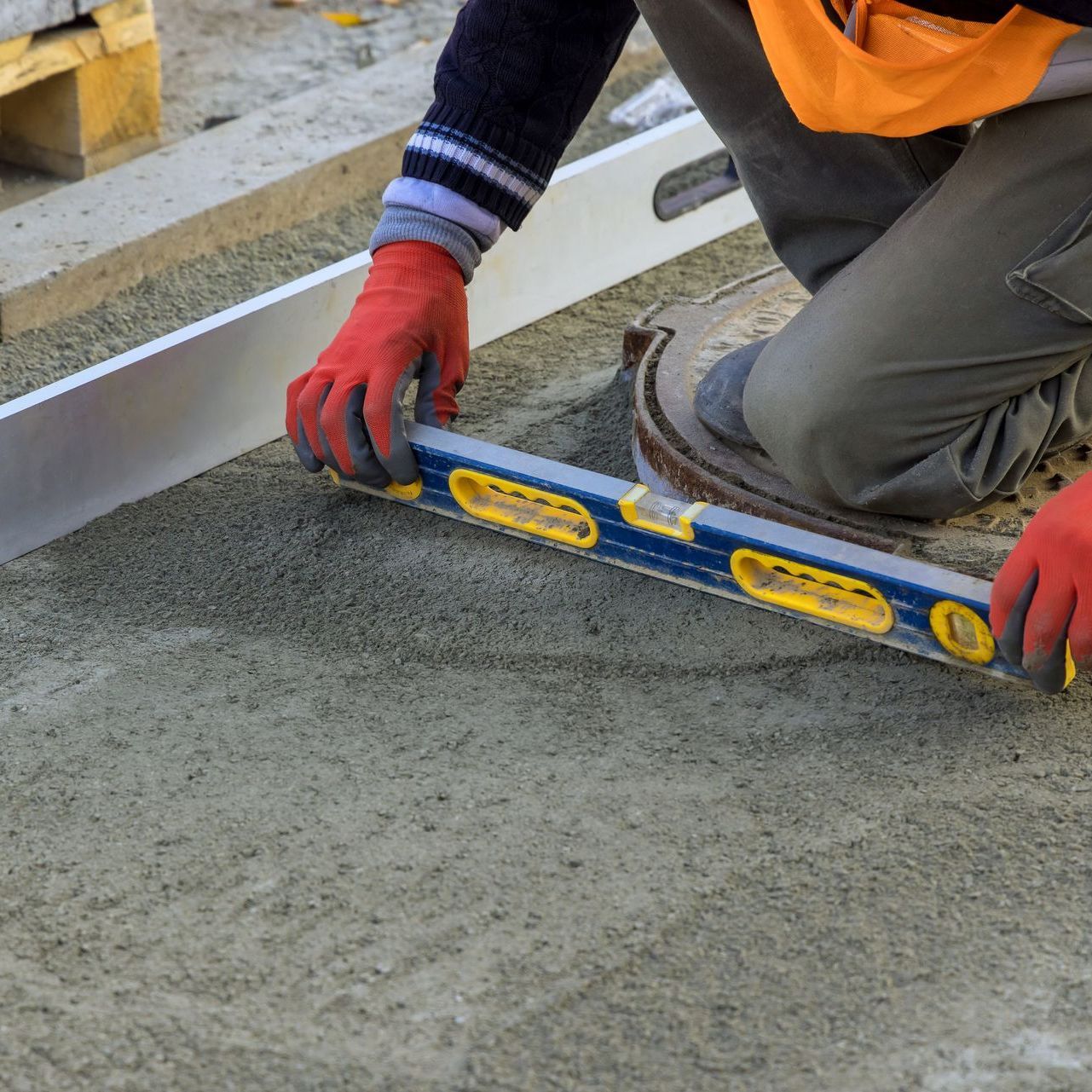
A cracked or worn slab doesn’t always mean starting over. Full replacement means demo, disposal, and days of downtime, while a concrete overlay can restore the surface in a fraction of the time at a fraction of the cost. The catch is knowing which situation calls for which approach, and getting that wrong can cost a contractor a callback.
When a Slab Still Has Life Left In It
The decision between overlay and replacement starts underneath the surface, not on top of it. If the existing concrete is structurally sound, meaning no major heaving, no widespread deep cracking, and no failed base beneath it, an overlay is usually the smarter path. The slab just needs to look better or perform better, not be rebuilt from the ground up.
Surface-level issues like hairline cracking, spalling, discoloration, or a worn finish are exactly what overlays are designed to solve. These problems are cosmetic and functional on the surface, but they don’t point to a failure in the slab’s foundation. That distinction is what separates a resurfacing job from a demolition job.
What Actually Happens During a Concrete Overlay
An overlay isn’t paint. It’s a new layer of polymer-modified concrete bonded directly to the existing slab, typically ranging from a thin decorative topping to a thicker structural layer depending on the product and the application. The polymer modification is what gives the mix its open time, flexural strength, and ability to bond to nearly any substrate, both vertically and horizontally.
According to the Indiana Ready Mixed Concrete Association, overlays bond directly to the old surface to create a unified layer that extends the life of the existing structure, and modern mix designs use advanced polymers and admixtures to improve adhesion, strength, and crack resistance. That bond is the entire mechanism behind why overlays work: the old slab becomes the structural base, and the new layer becomes the finished surface.
This is also why prep work matters so much. A contaminated or improperly profiled surface won’t let the new layer bond correctly, no matter how good the product is. Every overlay project lives or dies on what happens before the first pass of material goes down. Contractors sourcing overlay material through the BonTon Supply shop get products built specifically for that bond strength and workability.
Where Full Replacement Still Wins
Overlays aren’t a fix for every slab. Some conditions mean the existing concrete simply can’t support a new surface, no matter how well it’s prepped. A few situations that call for replacement instead:
- Deep structural cracks that move with temperature or load, signaling base failure rather than surface wear
- Significant settling, heaving, or sections of the slab at noticeably different elevations
- Poor drainage or grading issues that will just resurface through a new overlay
- Extensive spalling or scaling that has compromised more than the top layer of the slab
- A base that was never properly compacted or installed to begin with
Trying to overlay a slab with any of these problems doesn’t solve them. It just adds a new layer on top of an unstable foundation, and the same issues will telegraph through the new surface within a season or two.
Setting the Right Expectations on Cost and Timeline
Overlays win on speed and budget when the slab qualifies. Because there’s no demolition, no disposal, and no waiting on a full cure before traffic returns, an overlay project typically wraps in days rather than the week or more a full replacement can take. Material costs are lower too, since the job uses a fraction of the concrete volume a full pour requires.
Replacement costs more because it includes everything an overlay skips: breaking out the old slab, hauling it away, regrading and compacting the base, forming, and pouring new concrete that needs a full cure cycle before it can handle load. For a contractor pricing a job, that difference isn’t just material cost. It’s labor days, equipment rental, and a longer window before the client’s space is usable again.
Common Overlay Mistakes That Turn Into Callbacks
Most overlay failures trace back to a handful of preventable errors. Knowing them ahead of time is cheaper than fixing them after the fact:
- Skipping or rushing surface prep, leaving oil, sealer residue, or laitance that blocks proper bonding
- Applying overlay material over a slab with unresolved moisture or drainage problems
- Using the wrong overlay thickness for the substrate condition or expected traffic load
- Misjudging cure and open time in hot or cold Ohio weather swings
- Not testing bond strength on a small section before committing to the full pour
Answers to more overlay-specific application questions, including product-level guidance, are covered in the BonTon Supply FAQ.
How BonTon Supply Helps Ohio Contractors Choose the Right Approach
Knowing whether a slab is a good overlay candidate isn’t always obvious from a walk-through. It takes an honest read on the base, the existing concrete’s condition, and what the finished space actually needs to hold up to. Getting that assessment wrong upfront is what turns a one-day overlay job into a warranty dispute six months later.
Contractors working with BonTon Supply get more than a materials order. We’ve spent over a decade using Stone Edge products ourselves, which means we can talk through whether a job is an overlay candidate or a replacement job before material ever gets ordered. Browse examples of finished overlay work in the BonTon Supply gallery to see the range of what’s possible on a qualifying slab.
- Product guidance based on real jobsite experience, not just a spec sheet
- Polymer-modified overlay systems built for Ohio’s temperature swings
- Support estimating material needs before a bid goes out
The line between overlay and replacement comes down to what’s actually happening under the surface, not just what it looks like on top. BonTon Supply carries the Stone Edge overlay systems Ohio contractors use to make that call with confidence. Request a quote to talk through your next job.