
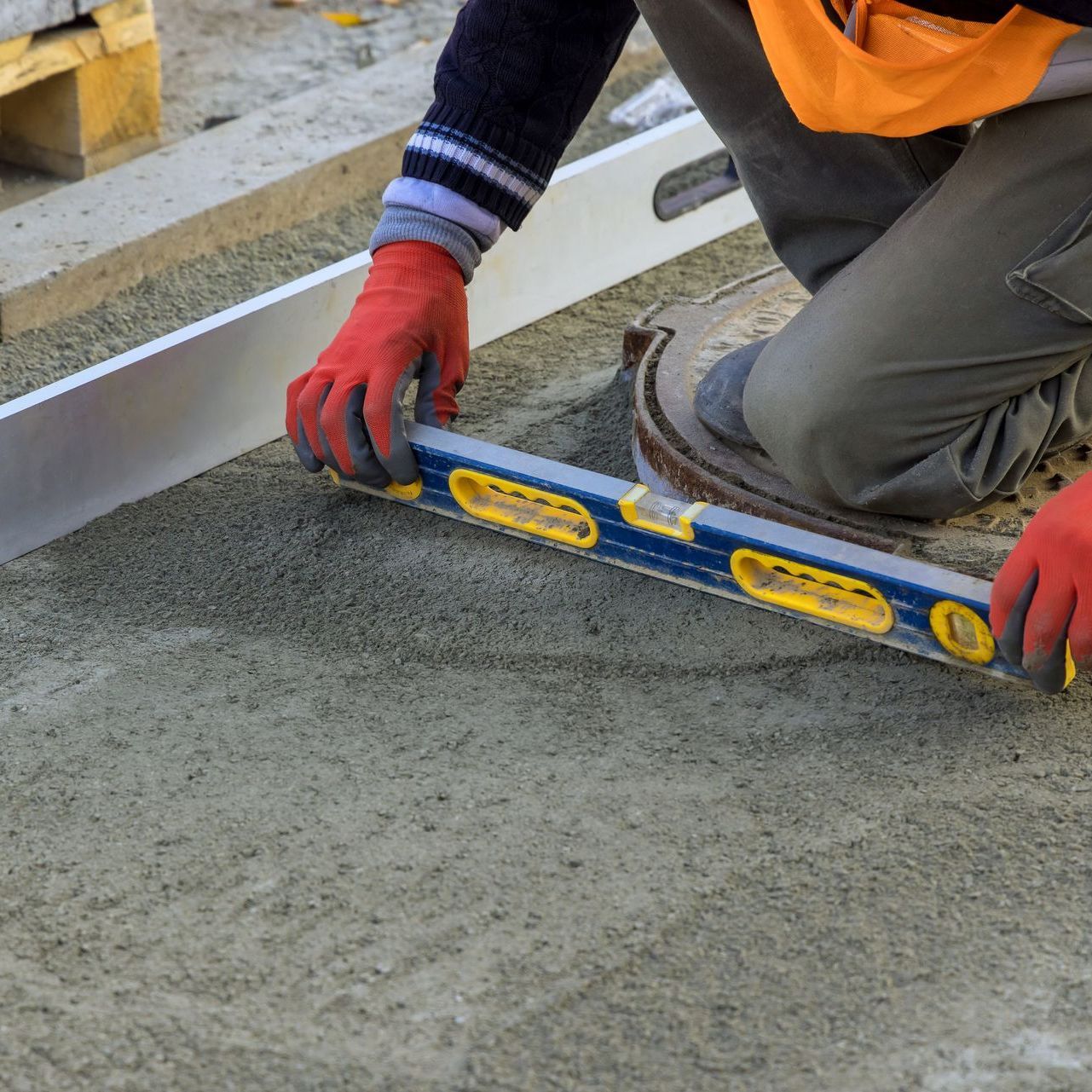
Gravity treats a wall and a slab completely differently, and so should the mix going on them. A formulation that self-levels beautifully on a patio floor will sag, slump, or slide right off a vertical surface if it’s not adjusted for the application. If you missed our breakdown on choosing the right concrete sealer, that decision comes after this one, since the substrate has to be right before sealer even enters the conversation.
Why Horizontal Applications Are the Easier Default
Horizontal overlays, the kind used on driveways, patios, and pool decks, benefit from gravity rather than fighting it. The mix can be formulated with more flow and self-leveling characteristics because there’s no risk of the material sliding before it sets. This is why most standard overlay products are designed with horizontal use as the baseline.
What Changes for Vertical Work
Vertical overlay applications, used on retaining walls, planters, and architectural features, need a mix that resists slump. That means less water in the ratio, different aggregate sizing, and often a thickening agent or higher polymer content to help the material cling to the surface as it’s applied and cures.
Guidance from the International Concrete Repair Institute notes that repair and overlay mortars are formulated differently depending on whether the application is vertical or overhead, with mix stickiness and evaporation control becoming critical factors that don’t apply the same way on a flat, horizontal pour. That distinction is the entire reason a product built for a driveway isn’t automatically the right pick for a retaining wall.
Application Technique Differences
- Vertical work is typically applied in thinner lifts to avoid slump before initial set
- Horizontal work often uses trowels and floats for a smooth or textured finish across a large area
- Vertical surfaces may need a bonding agent applied first to improve initial adhesion
- Cure time monitoring matters more on vertical work, since sagging can occur well after initial placement if the mix is too wet
Trying to apply a horizontal-rated overlay to a vertical surface without adjusting water content or technique is one of the fastest ways to end up with a sagging, uneven finish that has to be redone.
Where Contractors Get This Wrong
- Using the same mix ratio for a wall project that worked fine on a patio job
- Applying too thick a lift on vertical work, causing the material to slump before it sets
- Skipping a bonding agent on vertical substrates that need it
- Underestimating how much longer vertical work takes per square foot compared to flatwork
How BonTon Supply Helps Contractors Match Product to Application
Not every Stone Edge overlay product is built for both orientations, and using the wrong one costs time and material on a job that should have gone smoothly. Knowing which system is rated for vertical work before ordering saves a redo.
BonTon Supply can walk contractors through which overlay systems are formulated for vertical applications versus standard horizontal work. Check the FAQ for product-specific application questions, or browse finished vertical and horizontal work in the gallery.
- Product guidance matched to vertical or horizontal application
- Support on bonding agents and mix adjustments for wall and feature work
- Stone Edge systems built for both orientations
Getting an overlay to perform starts with matching the mix to the surface it’s actually going on, not assuming one formula works everywhere. BonTon Supply stocks the Stone Edge systems Ohio contractors use for both vertical and horizontal work. Browse the shop or request a quote to talk through your next project.